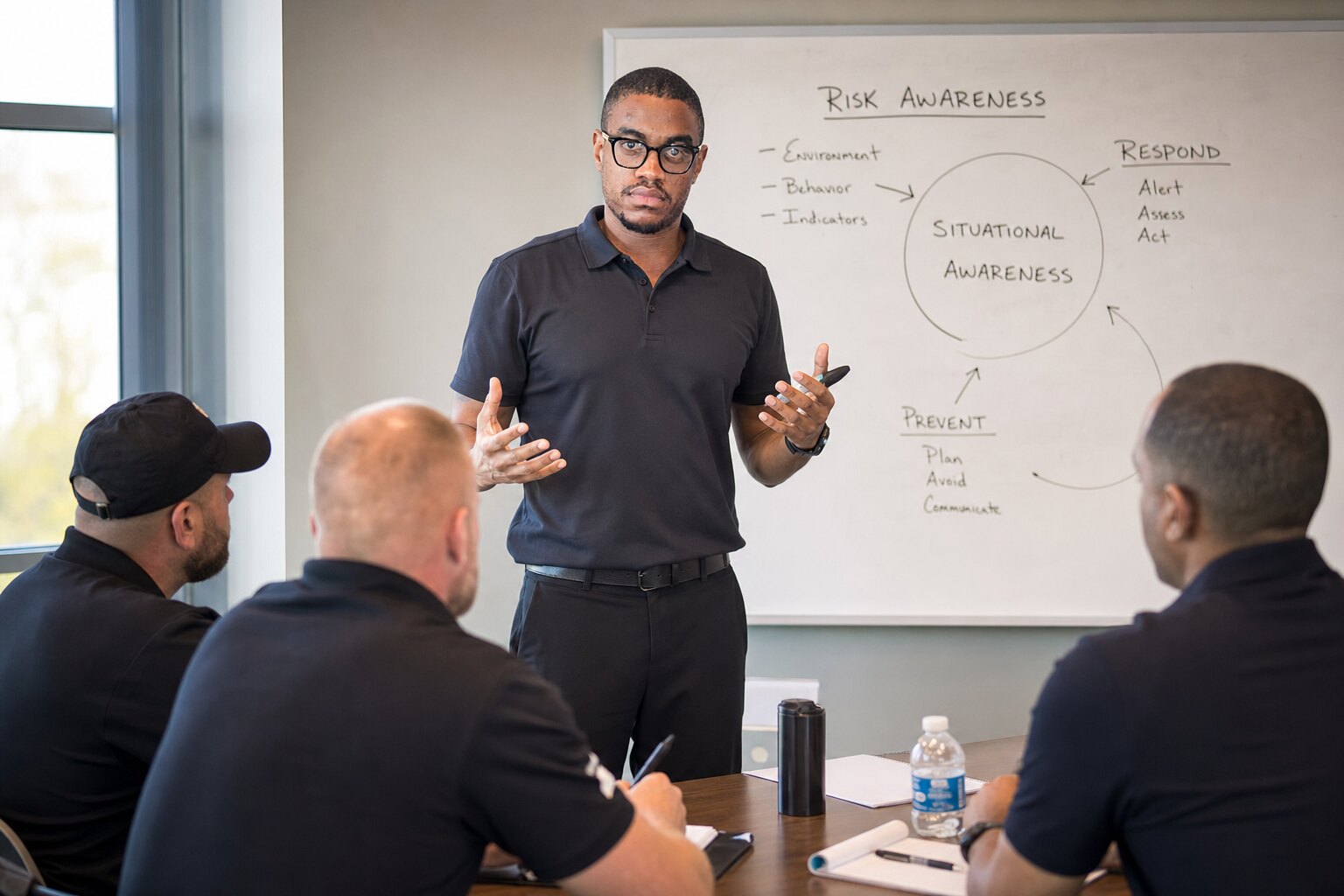
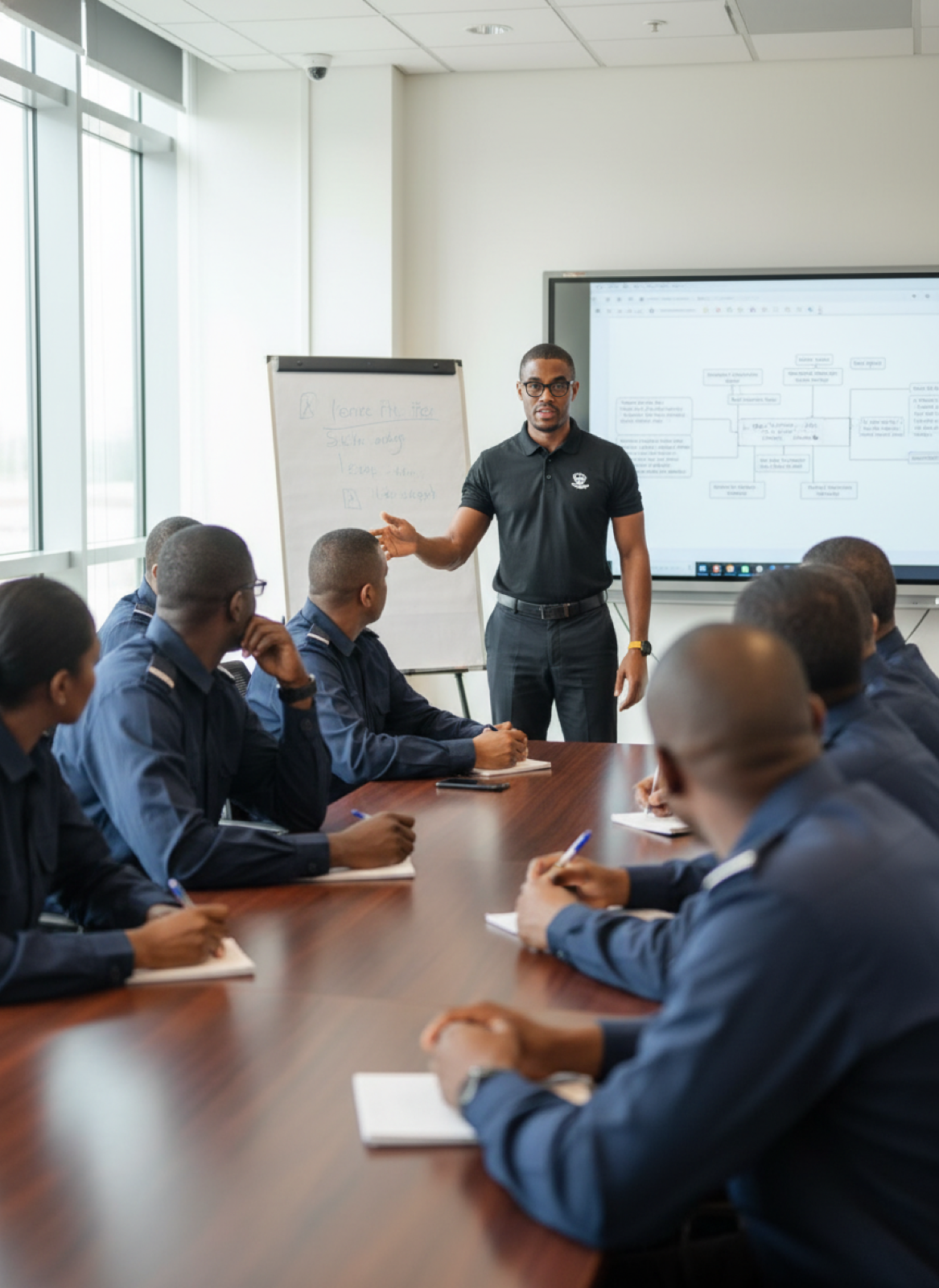
Bryant coaching a security officer through a readiness drill
Bryant Protective Services · For Security & EP Firms · Palm Beach · Broward · Miami-Dade

Train your team to a standard you can document —
and win the next contract on it

When a guard fails, the deposition never asks how tough he was. It asks whether he was trained to recognize the threat, and whether you can show it. Warrior Nation gives your existing team measurable, scenario-based threat-recognition instruction and gives you the paper trail to match: written attendance records, modules covered, scenario scores, instructor notes, and a 90-day follow-up drill plan. The result strengthens your internal risk-management file and sharpens the team you put in front of your next client — so a training-standards question becomes the reason you win the contract instead of the reason you lose it.

  • FL Class D & G Licensed (verifiable)
  • E&O Insured · References on request
  • We layer onto your program — never replace it
Scroll
Bryant briefing a team of officers before a scenario
The gap every owner knows

The license makes an officer legal.
It doesn't make them defensible.

Once the card is issued, Florida asks nothing more of the officer until the next requalification. The difference between a contained incident and a litigated one lives entirely in that untrained space — and it's your name on the contract when it goes wrong.

A deposition never asks how tough your guard was. It asks whether he was trained to recognize the threat — and whether you can prove it.

01

The license is a floor, not a defense

Florida's 40-hour Class D and 28-hour Class G courses cover law, procedure, and the range. They were never built to develop judgment under pressure — and the state requires zero continuing education to keep it sharp once the card is issued.

02

Judgment is what gets tested in court

A jury never sees the certificate. They see how an officer read the situation, held composure, communicated, and decided when something turned tense, unclear, or fast. That is what plaintiff's counsel will reconstruct frame by frame.

03

Untrained judgment is your liability

Negligent-training, negligent-retention, and use-of-force claims name the company, not just the officer. Documented, defensible supplemental training is a direct, line-item reduction of your exposure — and your insurer will notice.

A claim doesn't ask if your officer was licensed.
It asks what you did to make him ready — and whether it's on paper.

What you actually get

A documented program — not a motivational day.

This is a defined engagement with a written deliverable, not a pep talk. Every officer who attends is trained on the judgment the state minimum never touches, and every session leaves a paper trail your clients and carrier can verify.

  • Curriculum across threat recognition & pre-incident indicators, command presence without escalation, de-escalation, radio & team communication, protective positioning, and defensible use-of-force decision-making
  • Delivered in 3–4 hour blocks for groups of 8–12 officers and supervisors — sized to your shift coverage, not a classroom
  • A written threat-assessment report on your posts and procedures, in language your clients and carrier can read
  • A 90-day follow-up drill to confirm the training held — not a one-and-done certificate
  • Training logs and attendance records for every session, built for your bid packages and insurer files
  • E&O insured, references available on request, fixed scope agreed before we start
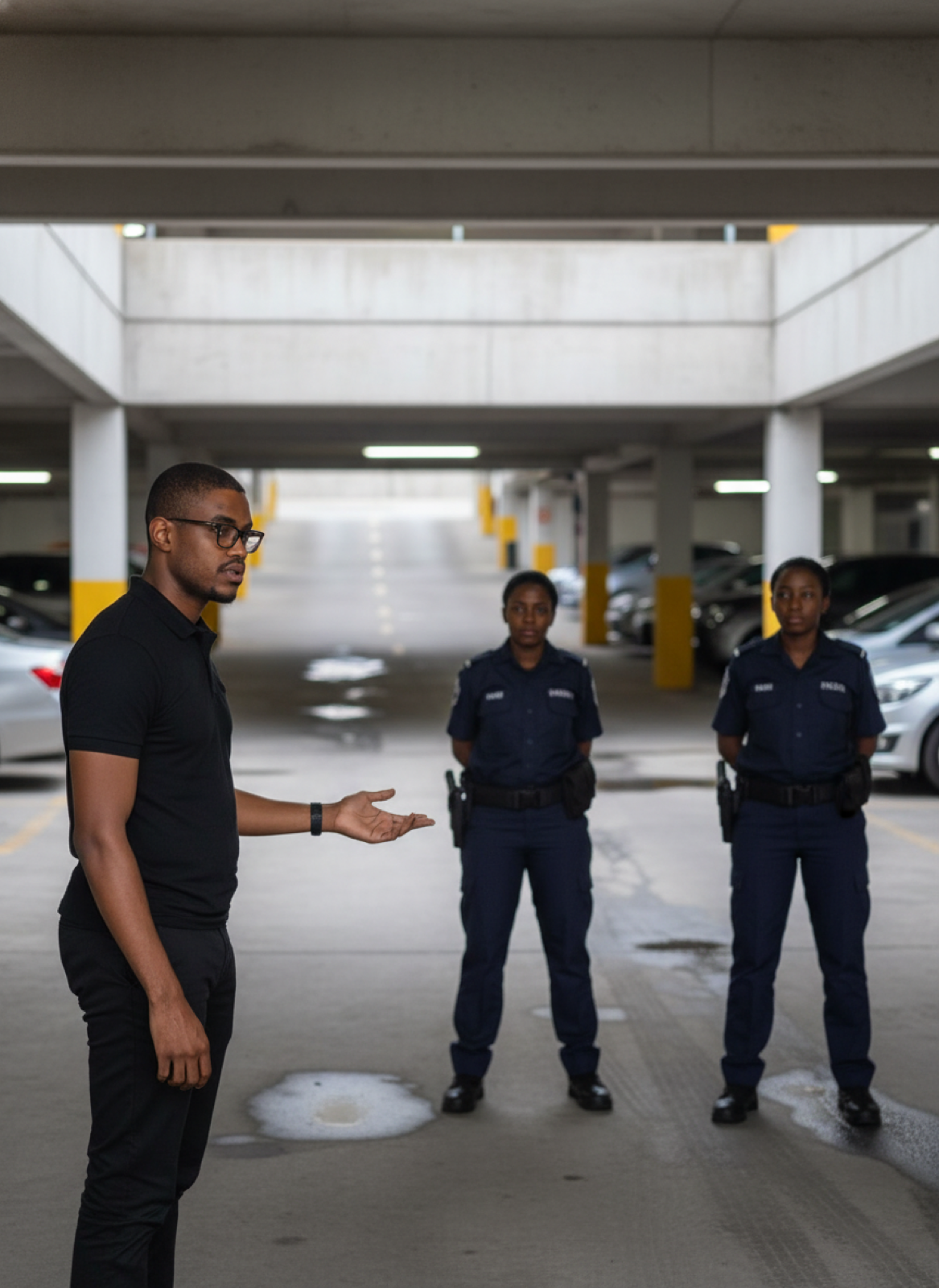
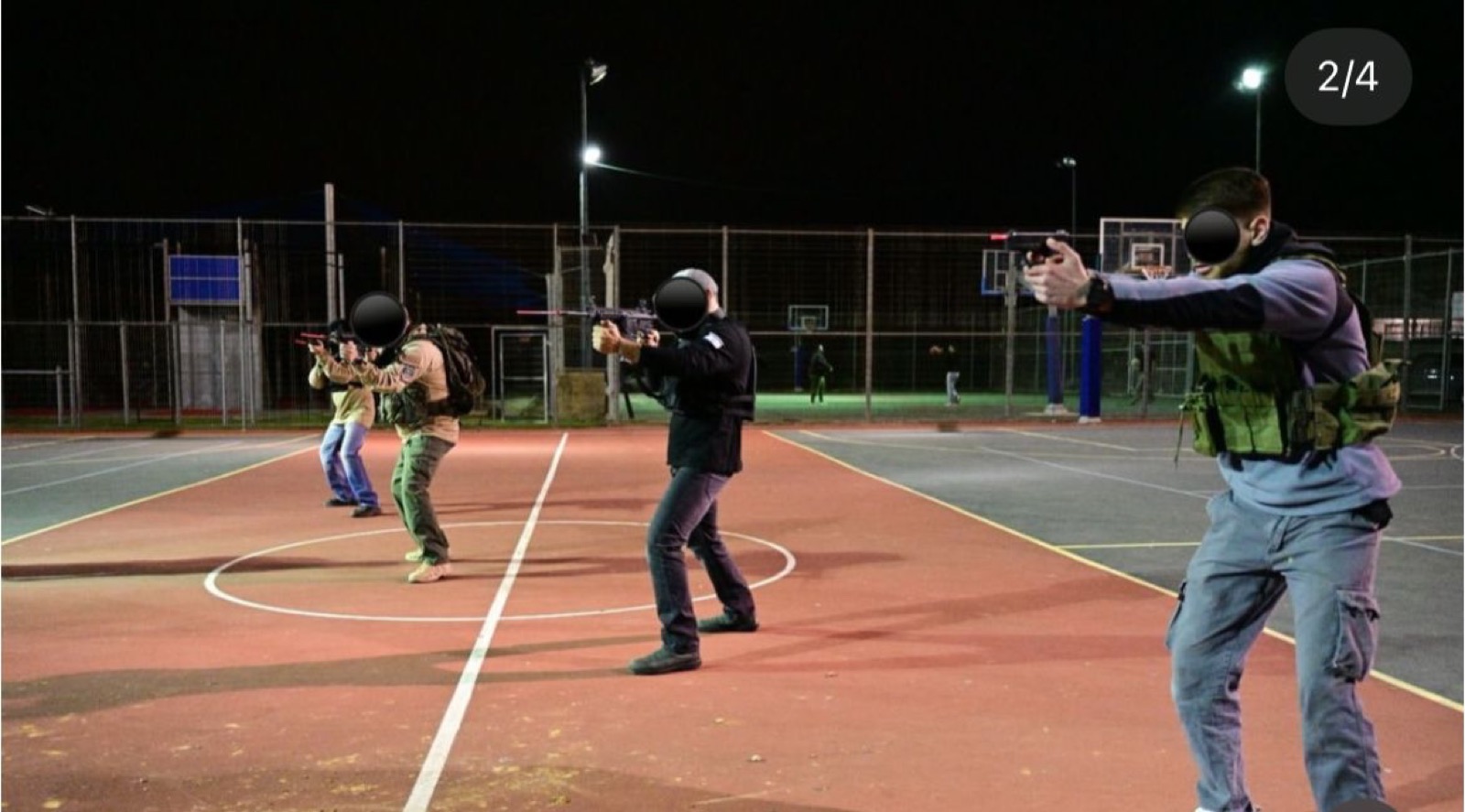
Officer working a controlled scenario under instruction
  • Bolts onto the annual Class G requalification cycle your armed officers already run
  • Non-firearms by design — judgment, de-escalation, positioning, and communication
  • We layer onto your SOPs and licensing program; we never replace your procedures
~100%Annual guard turnover across the industry — onboarding pressure squeezes out training
+11%Year-over-year rise in Florida negligent-security claims
0Hours of continuing education Florida requires once an officer is licensed
Why it pays for itself

A premium story and a smaller risk profile.

Most security is sold on price. Documented readiness training lets your firm compete on something far harder to undercut: "Our officers receive advanced readiness training from a protective-operations specialist — and we keep the logs to prove it."

That wins higher-value accounts, and every documented session becomes evidence of due diligence if an incident is ever litigated. Better decisions under pressure mean fewer avoidable escalations, fewer incident reports, and steadier client relationships.

Better-prepared officers make your company easier to sell, easier to defend, and harder to replace with a cheaper competitor.

Bryant teaching officers in a supervised session
Program ladder

Start with a pilot. Prove value. Scale.

Most firms begin with an assessment or a single workshop, then move to a retainer once their team and their clients feel the difference. Scope and price are fixed in writing before we start.

01

Readiness Assessment

A short evaluation of post awareness, communication discipline, approach behavior, and supervisor coaching — delivered as a written readiness scorecard you can act on immediately.

Half-day on-site
02

Officer Performance Workshop

A focused block for 8–12 officers and supervisors: threat recognition, command presence without escalation, de-escalation, radio discipline, and live scenario reps.

Half-day · 8–12 officers
03

Supervisor & Armed-Officer Lab

Advanced day for supervisors, armed officers, and EP teams: pre-incident indicators, protective positioning, team roles under stress, use-of-force judgment, and after-action review.

Full-day · advanced
04

Quarterly Readiness Retainer

Ongoing edge: recurring sessions, quarterly scenario evaluation, supervisor coaching, and an annual readiness report your clients and insurers can see.

Recurring · ongoing
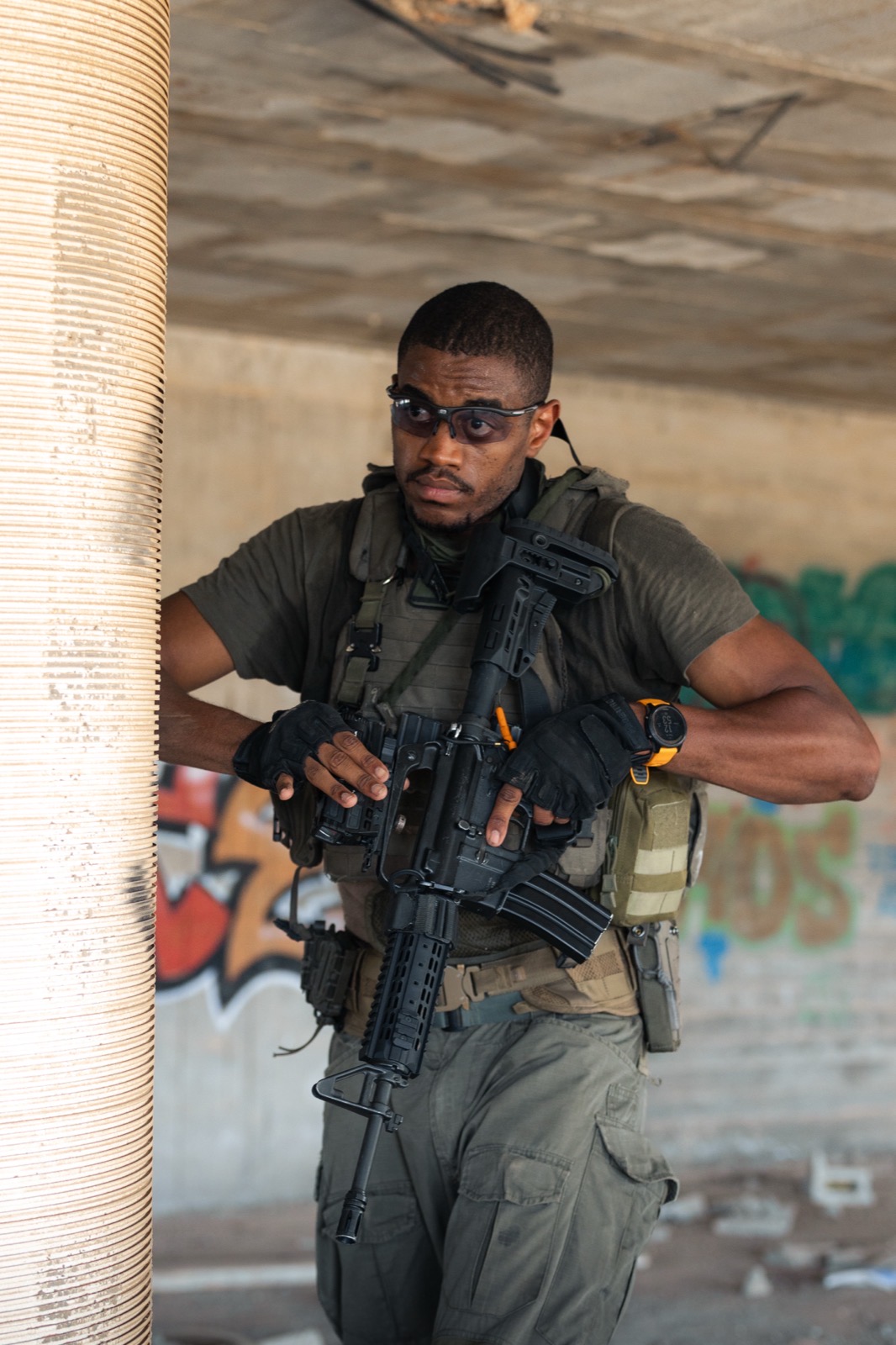
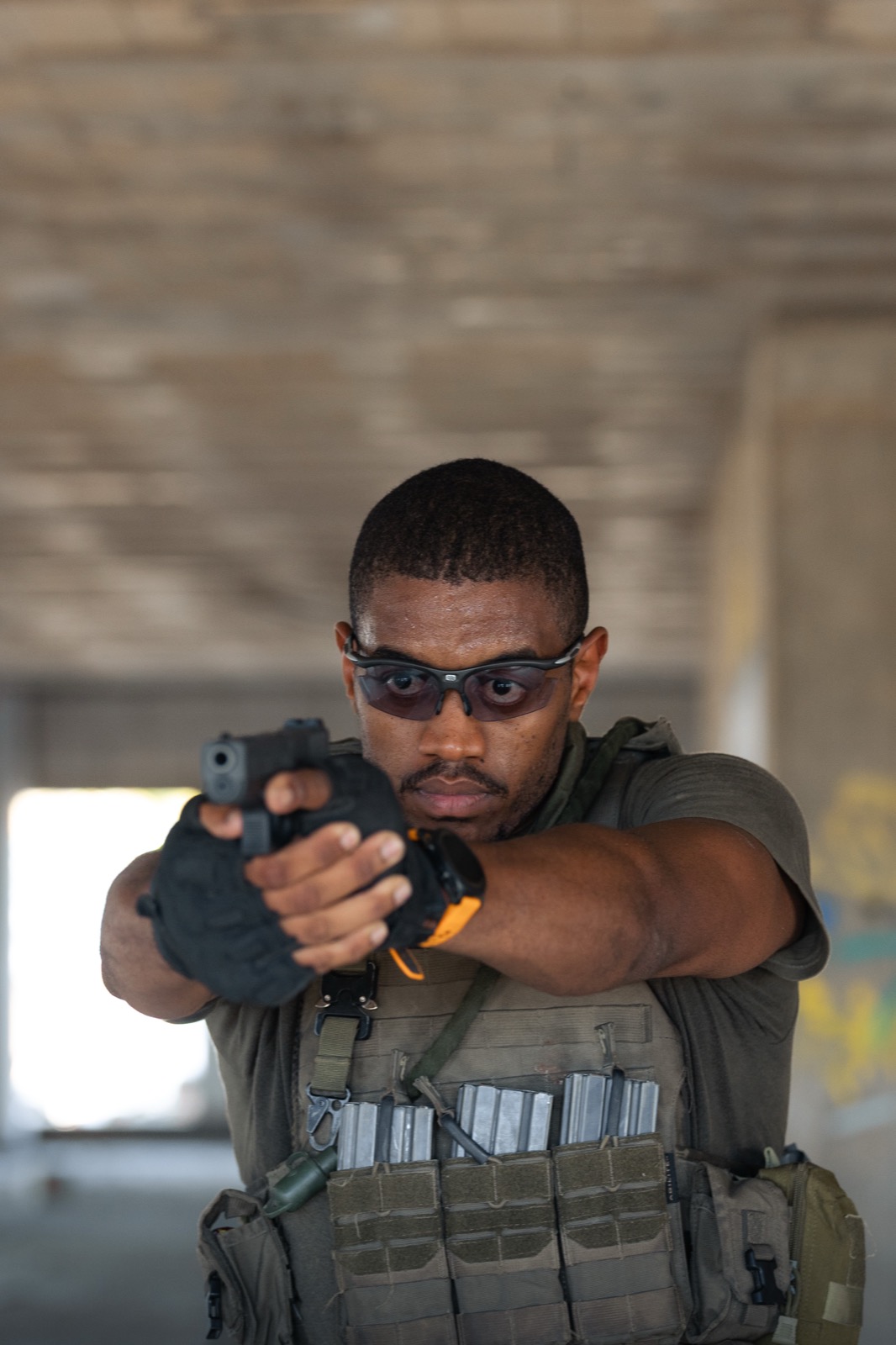
Officers running a low-light readiness scenario
Bryant presenting to a room of officers
Who delivers it

Credibility your clients can verify.

Bryant led 60+ soldiers as a unit commander in the IDF's Kfir Brigade, served on Israeli Ministry of Defense protective details safeguarding senior officials including the Minister of Defense, and worked as an executive-protection agent from 2022–25. He holds a B.A. in Criminology from Bar-Ilan University and current Florida Class D (CST2026017313) and Class G (CFP2026017009) licenses, verifiable at mylicensesite.com — so the training he delivers is grounded in real operations and Florida's regulatory reality.

The goal is never to make your officers act like soldiers. It's to make them calmer, more aware, and more professional when something goes wrong.

His full record & the origin film

Scope a pilot for your officers.

Tell us your post count, your shifts, and the accounts you're trying to win or defend. We'll come back with a fixed-scope pilot — a written readiness assessment and a documented workshop — sized to your team. No obligation.

Scope a pilot for your officers →
Call (561) 679-2993